
Tooth Cavity Filling Cost in India: What You’ll Actually Pay in 2026
You felt it this morning — a sharp little twinge when you sipped cold water, or a rough edge your tongue keeps finding. Now you’re staring at your phone wondering one thing before you even book an appointment: how much is this going to cost me?
Fair question. And the honest answer is that a cavity filling in India costs anywhere from ₹500 to ₹12,000 per tooth — a range so wide it’s almost useless until you understand what actually moves the number. So let’s break it down properly, the way a dentist would explain it to you across the chair, minus the upsell.
Cavity Filling Cost in India by material
If you’re in a hurry, here’s the pricing at a glance. These are realistic per-tooth ranges across Indian clinics in 2026:
| Filling type | Cost per tooth (₹) | Best for |
| Glass Ionomer (GIC) | ₹800 – ₹2,000 | Kids, small cavities, non-visible teeth |
| Amalgam (silver) | ₹800 – ₹2,000 | Back molars, tight budgets |
| Composite (tooth-coloured) | ₹1,500 – ₹4,000 | Front teeth, everyday cavities |
| Ceramic / Porcelain inlay | ₹4,000 – ₹8,000 | Large cavities needing strength + looks |
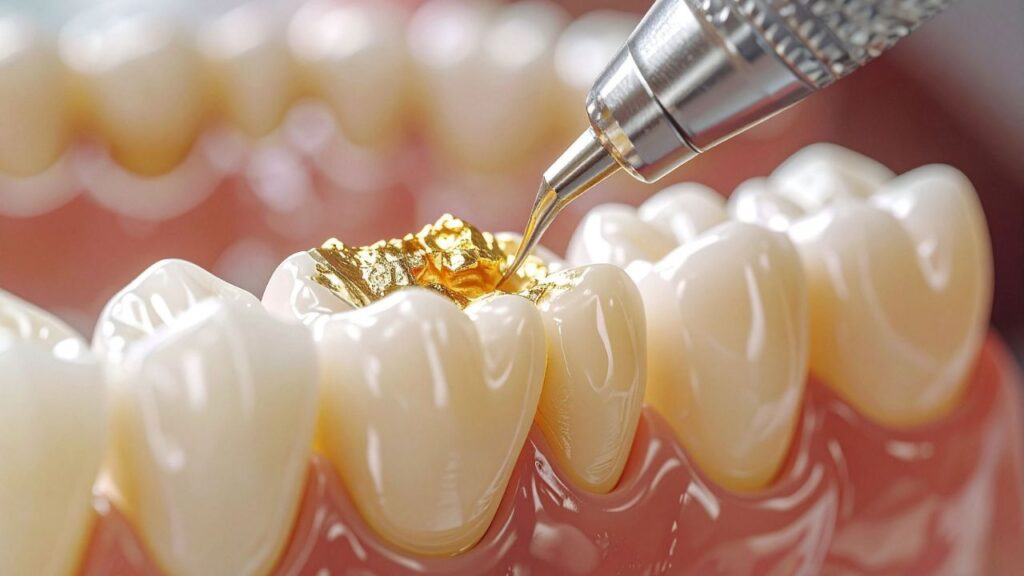
| Gold | ₹8,000 – ₹15,000 | Durability over aesthetics (rare now) |
Most people walk out having paid between ₹1,500 and ₹3,000 for a standard composite filling. That’s the number to keep in your head.
Why the Price Jumps Around So Much
Two people can walk into the same clinic with a cavity and leave with bills that differ by ₹5,000. Here’s what’s driving that gap.
The material you choose. This is the biggest lever. A silver amalgam filling and a premium ceramic inlay do the same basic job — seal the hole — but the ceramic costs four to eight times more because it looks like a real tooth and lasts longer. You’re paying for both the material and the lab work behind it.
Where the cavity sits. A cavity on a back molar can take a cheap, sturdy filling because nobody sees it. A cavity on a front tooth almost always needs a tooth-coloured composite, because a grey patch on your smile isn’t an option. Location quietly decides your material for you.
How deep the decay has gone. A shallow cavity caught early is a 20-minute, single-visit, single-surface filling. A deep one that’s crept toward the nerve might need extra surfaces filled — or worse, might not be a filling at all anymore (more on that below). More surfaces, more material, higher cost.
Your city and clinic. A filling in a Tier-2 city like Pune, Vijayawada, or Guwahati often costs noticeably less than the same filling in South Delhi or Bandra — not because the dentistry is worse, but because rent, competition, and overheads differ. City-wise, expect metros to sit at the top of each range and smaller cities near the bottom.
The dentist’s experience. An MDS specialist with fifteen years of experience charges more than a fresh graduate at a budget chain. Sometimes that premium is worth it — for a tricky front-tooth composite, absolutely. For a routine molar filling, less so.
The trap most people fall into (and it’s expensive)
Here’s the part nobody tells you until the bill arrives.
That ₹1,800 filling you’re putting off? Wait six months and it can quietly become a root canal plus a crown — roughly ₹11,000 to ₹15,000. The cavity doesn’t pause because you’re busy. It burrows deeper, hits the nerve, and now you’re not paying for a filling anymore; you’re paying to save the tooth.
This is the single most useful thing on this page: a cavity is the cheapest it will ever be the day you notice it. Every month you delay, the treatment ladder goes up a rung — filling, then root canal, then extraction and implant. The gap between “annoying twinge” and “₹40,000 implant” is often just a year of ignoring it.
What you’re actually paying for during the visit
It helps to know the filling itself is only part of the bill. A typical cavity appointment includes:
- The examination and diagnosis — sometimes a small X-ray to see how deep the decay goes
- Local anaesthesia — so you feel pressure, not pain
- Removing the decay — the drilling (or in some clinics, laser removal) that clears out the rotten part
- Placing and shaping the filling — layering the material and hardening it with a curing light
- The bite adjustment — making sure the filling doesn’t sit too high when you chew
Ask any clinic to itemise this before they start. A trustworthy dentist gives you the full number up front, with no “oh, and there’s also a charge for…” surprises at the counter.
Is a cheaper filling a worse filling?
Not necessarily — and this is where a lot of people overspend out of anxiety.
If your cavity is on a back molar nobody sees, a well-placed amalgam or GIC filling for ₹1,000 will serve you for years. Paying ₹6,000 for a ceramic inlay there is mostly buying peace of mind, not better function.
But if the cavity is on a tooth that shows when you smile, spending on composite is genuinely worth it. A grey filling on a front tooth is something you’ll notice in every photo for the next decade.
The smart move isn’t “cheapest” or “most expensive.” It’s matching the material to the tooth. A good dentist will tell you this honestly. If someone pushes the priciest option for a hidden molar, that’s your cue to ask why.
Does a filling hurt? (Since you’re wondering)
No — and this fear stops more people from getting timely treatment than the cost does. The tooth is numbed with local anaesthetic before anything happens, so the procedure itself is pressure and vibration, not pain. Some clinics now offer laser-assisted decay removal that reduces the drilling entirely. Afterwards, mild sensitivity to hot or cold for a few days is normal and fades on its own.
How long will a filling last?
With decent brushing and no chewing on ice or hard candy, here’s what to expect:
- GIC: 3–5 years (fine for kids, whose teeth fall out anyway)
- Composite: 5–10 years
- Amalgam: 10–15 years
- Ceramic / Gold: 15+ years
No filling is permanent. When one cracks or wears out, replacing it costs roughly the same as the original — occasionally less if it’s a simple swap.
A cavity filling in India is one of the most affordable ways to protect your health — usually ₹1,500 to ₹3,000 for the filling most people need. The material matters, the tooth’s location matters, and your city matters. But the biggest factor in what you’ll pay isn’t on any price list: it’s how long you wait.
Book the check-up. Get the honest quote. The twinge you’re feeling today is the cheapest version of this problem you’ll ever get.
Frequently asked questions
How much does a cavity filling cost in India?
Between ₹500 and ₹12,000 per tooth depending on material, but most standard composite fillings land at ₹1,500–₹3,000. Amalgam and GIC are the budget options starting near ₹800; ceramic and gold sit at the premium end.
Which filling is cheapest?
Glass Ionomer (GIC) and amalgam, both starting around ₹800 per tooth. GIC is preferred for children because it releases fluoride; amalgam is durable for back teeth but is being phased out for environmental reasons.
Is a tooth-coloured (composite) filling worth the extra money?
For any tooth that shows when you smile, yes. For a hidden back molar, a cheaper material works just as well functionally.
Can I get a filling done in one visit?
Almost always. Around 95% of standard fillings are completed in a single 20–30 minute appointment, unless the cavity is deep enough to need a root canal.
What happens if I don’t fill a cavity?
It gets worse and more expensive — a simple filling can turn into a root canal and crown (₹11,000+) within months, and eventually into extraction and an implant. Early treatment is always the cheapest.
Why is the same filling cheaper in some cities?
Smaller cities like Jaipur typically charge less than Mumbai or Delhi due to lower clinic overheads and higher competition — not lower quality.
This article is for general information. Actual costs vary by clinic and case — always get an in-person examination and a written estimate before treatment.


Read this blog on your favourite platform
Recent Blog
- मुँह का कैंसर: शुरुआती पहचान, कारण और इलाज — आसान भाषा में पूरी जानकारी
- Tooth Cavity Filling Cost in India: What You’ll Actually Pay in 2026
- Best Dental Clinics in India: List of Top 3 Dental Hospitals 2026
- Single Tooth Implant vs Dental Bridge: Which is Better?
- How Long Do Dental Implants Last? Complete Guide

Dr. Rajesh Gupta
+91 08233792911
youdentindia@gmail.com
Mon – Sat: 09:00 AM - 08:00 PM, Sun - Off
Shop no - 4, Metro Station, New Sanganer Rd, opposite Pillar No. 84, Jaipur, Rajasthan 302019